
Showing in Sao Paulo — Vox Exhibition at Echo Studios

Updated: Apr 26
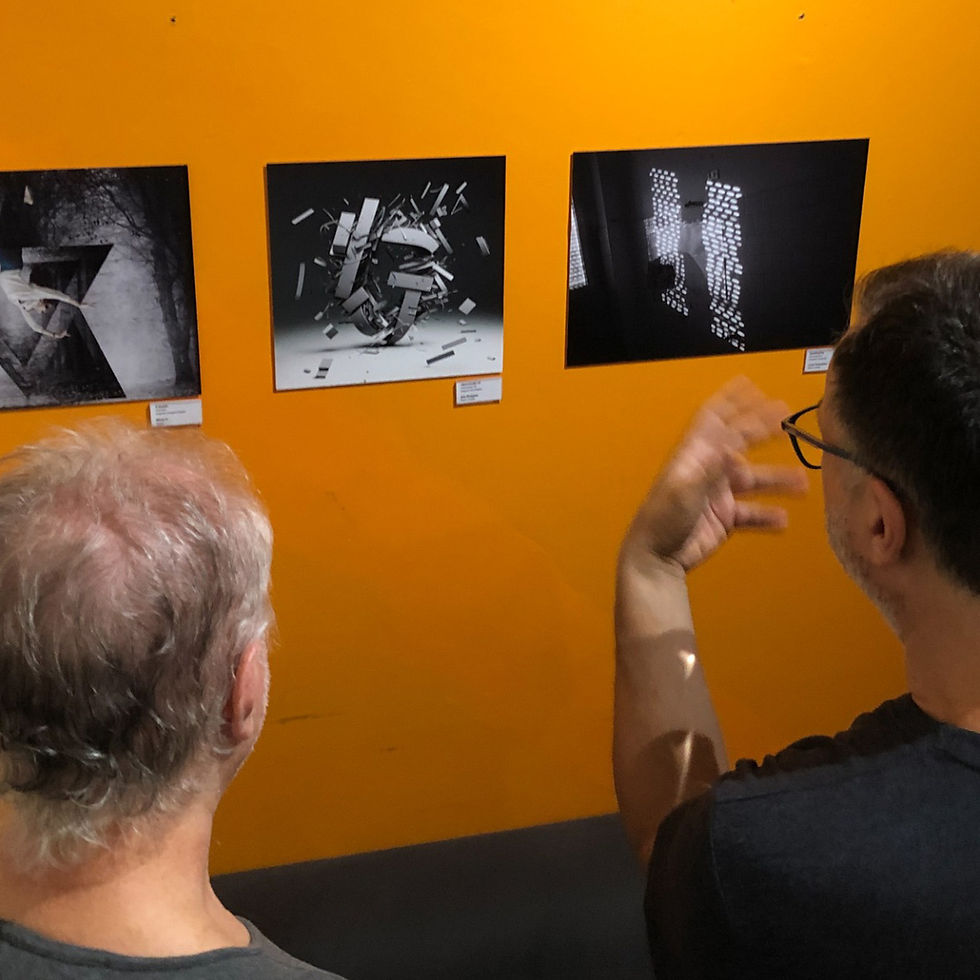
In 2022 and 2023, I showed work in Sao Paulo, Brazil — at Echo Studios as part of the Vox Exhibition. Brazil has a rich and deeply embedded typographic culture — from the graphic legacy of concrete poetry and the Noigandres group to the vibrant lettering traditions visible across the country's cities — and showing typographic work there carried a particular charge.
Typography in a Brazilian Context
Brazil's relationship with language and visual form is distinct. The concrete poetry movement of the 1950s — led by poets like Augusto de Campos, Haroldo de Campos, and Decio Pignatari — established a tradition of treating words as visual objects, stripping them of conventional syntax and arranging them spatially on the page. That legacy runs through Brazilian culture in ways that are still visible today, from graphic design to street art to contemporary fine art.
Showing my work in this context meant encountering an audience that understood intuitively what many European and American audiences need explained: that letters are visual forms first, and carriers of meaning second. The conversations I had in Sao Paulo about the work — about what happens when you present characters from 300 writing systems together, stripped of linguistic hierarchy — were among the most engaged and informed I've had anywhere.
International Practice
Showing internationally is important for the practice, not just for exposure but for the way different cultural contexts reveal different readings of the same work. A piece that reads as abstract formalism in London might read as cultural commentary in Sao Paulo or as nostalgic in Tokyo. These shifts aren't accidental — they're built into the work's structure. When you use characters drawn from global writing systems, every audience brings their own linguistic memory to the encounter.
The Sao Paulo exhibition reinforced something I've long believed: that the themes at the centre of my practice — cultural syncretism, the movement of symbols between traditions, the construction of identity through convergence — are not local concerns. They're experienced differently in every city, but they're felt everywhere.


