
Works
The practice is articulated through three exhibition-led research strands. Each represents a distinct mode of inquiry into language as visual form, yet all share a common investigation: how meaning is constructed, destabilised, and reformed through the act of writing.
STRAND I
Language as System
Generative typographic ecologies in space and time
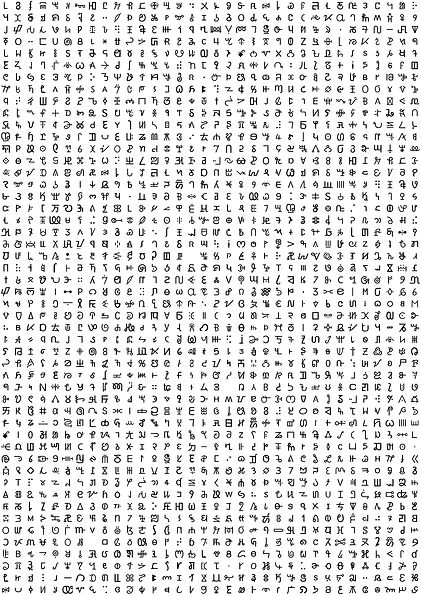
These works operate as rule-based systems in which typographic elements are released, accumulated, and reorganised across time and space. Drawing from an archive of over 300 global alphabets, the installations generate evolving typographic fields that resist singular interpretation.
Works: Polyglot · Archetype


STRAND II
Language as Memory
Identity and geography encoded through text
Text behaves as unstable recall — fragmenting, distorting, and reforming in response to psychological and geographic experience. Drawing from sleep diaries, personal archives, and landscapes of significance, these works examine how identity is assembled through partial remembrance.
Works: Lucid · Mosaics
STRAND III
Language as Origin
Writing as an early visual art form
Before alphabets stabilised into systems of communication, marks functioned as images — symbolic gestures etched into cave walls, stone, and clay. By isolating and reconfiguring characters drawn from diverse writing systems, these works reposition letters as sculptural and iconographic entities.
Works: Syncretic Forms · Letragrafika
